• Costa, K. A. (2007). The Coach Fellas: The Invisible, Paradoxical Leadership of the Coach Tour “Big Man” in Irish Tourism. Practicing Anthropology, 29(3), 36–39. http://www.jstor.org/stable/24782396

    Delaney, E. (2025). The Saxon’s Language’: Cultural Change and the Irish Language. Oxford University Press. https://doi.org/10.1093/9780191878411.001.0001

    Kearns, G., Rowan, R., Dowler, L., Moore, E., Robinson, J. S., & McVeigh, R. (2024). Anticolonial Irish History: A Round-table. Journal of Historical Geography84, 150–153. https://doi.org/10.1016/j.jhg.2024.02.005

    Nakayama, J.M. T. (2021). Experiencing Intercultural Communication: An Introduction: 2025 Release. McGraw-Hill Higher Education (US).

    Ó Gráda, C., & O’Rourke, K. H. (2022). The Irish Economy During the Century After Partition. Economic History Review75(2), 336–370. https://doi.org/10.1111/ehr.13106

    Scroope, C. (2017). Irish – Family. Cultural Atlas. https://culturalatlas.sbs.com.au/irish-culture/irish-culture-family

    Zuelow, E. G. E. (2006). “Ingredients for Cooperation”: Irish Tourism in North-South Relations, 1924-1998. New Hibernia Review / Iris Éireannach Nua, 10(1), 17–39. http://www.jstor.org/stable/20646512
  • Business and the Irish Economy

    The business etiquette of Ireland is that which will be quite familiar to us in America, as it shares a lot of practices with the western world. They also value a lot of the same things such as a certain expected level of formality and having a similar value for relationships and trust when conducting business. They also tend to expect business meetings to begin by shaking hands with everyone present and a short period of small talk to get to know each other or catch up before conducting business. It is also common practice for many meetings to take place within a pub or a restaurant as it’s most important to socialize and build a rapport, since the agendas often come second to these chances to strengthen these relationships as many in Ireland are of the belief that “the work gets done because of the relationships” (Nakayama). However, for more formal meetings held in an office or other professional setting where these moments for small talk will be shorter and higher standards of conduct will be maintained. Irish culture also values punctuality, as being late in the business world can show a sign of disrespect for other’s time.

    The economy of Ireland is one that goes through many fluctuations as “The economic history of Ireland over the past century is one of persistent failure followed by a spectacular recovery” (Ó Gráda). This was due to a number of factors, but Ireland is currently going through a strong growth period for their economy, with their main exports being pharmaceuticals, organic chemicals, and various manufactured articles and machinery.

  • The Relationships of Ireland

    Ireland is a country, quite similar to America, when it comes to the family structure since both had much influence from British colonialism. Irish culture highly values strong family ties, with extended families living in close proximity being common in the past. They also have a similar nuclear family archetype of the main family unit consisting of two parents and their children. These families often are built on close relationships and a large support network for every individual. Ireland also has many diasporic histories as a large number of Irish had left Ireland during the potato famine in 1845. A diaspora is “a massive migration, often caused by war, famine, enslavement, or persecution, that results in the dispersal of a unified group” (Nakayama), and many Irish Americans can trace their ancestry to this period. The usual sense of community and strong family values tends to mean that most people in Ireland are quite welcoming to others that have Irish ancestry whose families may have left during this time.

    Dating and marriage are other forms of relationships that are similar to much of the western world. “During high school, teenagers will begin to socialize in group activities with peers from school or those living in the same neighborhood” (Scroope) and many people begin dating around this age. The deep Catholic values in country also tend to mean most people have Catholic weddings, where others who choose not to often will only have a civil wedding. The influence of the catholic church has diminished in recent times however, and has meant that a large majority of the population are getting married at a later age and feel less pressure to marry young.

  • Tourism in Ireland

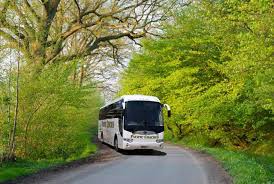
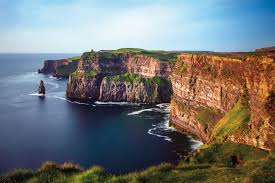
    Ireland is an amazing destination for many tourists that wish to explore a new country, and as much of 5% of the country’s revenue in most years. While Dublin is the capital city of the Republic of Ireland, there are many other historical, cultural, and social places that tourists can, and should, visit to enjoy everything that the country has to offer. Many Irish Americans can trace their ancestry here as many people had fled the country during the Irish potato famine, so many people in Ireland are often very welcoming and eager to meet those with Irish heritage. Also, in the Republic of Ireland and North Ireland, “there was […] a long history of cooperation and close ties between the members of the respective tourist bodies of [both] on which to base future collaboration” (Zuelow), where in general there is a lot of tension between the two countries.There are also several ways to experience the rich culture of Ireland, with many tours, agencies, and coach busses available to assist tourists on their first time in the country. In one study done for the journal, Practicing Anthropology, a researcher found that “bus drivers in the study [were] overwhelmingly well-trained, compassionate, entertaining, forgiving, organized, knowledgeable, and excellent at the business of driving buses” (Costa). With various cities and small towns to visit many tourists can find a variety of ways to spend their time. From the capital city of Dublin, the Cliffs of Moher off the western coast, and many other sights to see, the Republic of Ireland has an amazing culture to explore.

  • Irish Language

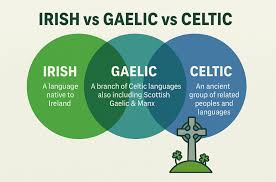
    Due to the centuries of British rule, much of the population of Ireland uses English as the language of choice for daily life. However, before this time the dominant language of Ireland was the Irish language, or Gaeilge, which is the first official language of the Republic of Ireland. This language can be traced back to the Goidelic language branch of the Celtic languages, which also include the Scottish, Gaelic, and Manx languages. Having these two languages means that “multilinguals must engage in language negotiation [and choose], whether explicitly or implicitly, which language to use in a given situation” (Nakayama). Many of the Republic of Ireland who live along the west coast in more remote villages tend to only speak the Irish language and don’t have to deal with this same issue.

    In much of the rest of the country however, English is the language used in most everyday life, government interactions and documents, and education. The only exception of this in education however are some schools found outside the Gaeltacht region, an area along west coast as previously mentioned, where the entire curriculum is given in Irish, these schools are also called Gaelscoil. “Irish was, and is, a vibrant living language, which in a very different context, could have remained the dominant language for everyday interactions whereas English remained the formal language of government, law, and commerce” (Delaney). With the many cultural revolutions that have taken place and the independence of the Republic of Ireland, there has been a constant and powerful drive to increase the number of fluent Irish speakers within the country.

  • History of Ireland

    Ireland is a country with a long history of suppression, division, and eventual freedom. The country had been under British rule between 1801-1922 when the Republic of Ireland had earned it independence, apart from six northern counties that chose to remain a part of the United Kingdom and became North Ireland. This divide can still be seen in present day as “Ireland’s two states north and south are members of NATO and the European Union respectively” (Kearns, et al) showing how even their modern-day allies vary. The reason for this was that these counties were predominantly protestant whereas the rest of the island is mainly catholic. Ireland has had a complex history due to this struggle with British rule, which can be traced much farther back to invasions all the way back in 10th century.

    The overwhelming presence of British rule has influenced many other aspects of Irish culture, such as religion, language, and their relationships to themselves and others. However, the Republic of Ireland had begun to revive their own culture with the Celtic Revival in the late 19th century, before they even became independent. With the foundation of the Gaelic League in 1893 to try and bring back the Irish language and promote its use in daily life. There was also the Gaelic Athletic Association that was started in 1884 to promote indigenous Gaelic games such as hurling, camogie, Gaelic football and many more. There were also a several other efforts and foundations that were started that influenced the drive for the independence of Ireland that are still around today.

  • Irish Culture

    Learn about the rich and storied culture of Ireland!